
CINEMA 4D GUIDE
How to Install Plugins in Cinema 4D
This guide explains how to install plugins in Cinema 4D, choose where the plugin files live, and check that Cinema 4D has loaded them. Follow the plugin developer’s installer or instructions first, then use the folder methods below where manual installation is supported.
Plugin Install
Cinema 4D Setup
Troubleshooting

01
How to install plugins in Cinema 4D:
add a search path.
A custom plugin folder gives you an accessible place to manage manual installs. Keep builds for different Cinema 4D releases clearly separated and follow any plugin-specific instructions.
- Prepare the folder. Extract the download and place the complete plugin folder in a location where your account has access.
- Register its location. Open Preferences → Plugins, use Add Folder in Search Paths, and select the directory containing the plugin. The lead screenshot shows these controls.
- Restart and verify. Restart Cinema 4D, then find the tool using the developer’s stated menu, command or object type.
Maxon’s plugin search-path reference explains which directories are scanned automatically and how duplicate paths are handled. Avoid registering a default path again or adding overlapping subfolders.
02
Use the preferences
plugins folder.
Start Here
For a version-specific manual installation, open the preferences folder from the copy of Cinema 4D you are actually using. This avoids guessing which version’s settings folder is active.
- Download a build that supports your Cinema 4D release and platform, then extract the archive.
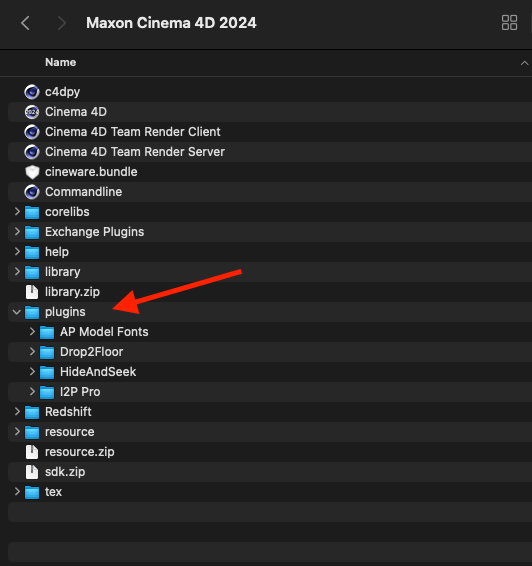
- Open Cinema 4D preferences and use the button that opens its preferences folder.
- Locate the plugins directory, creating it if needed for this method.
- Close Cinema 4D before copying or replacing plugin files. Copy the complete plugin folder, including its supporting resources, into that directory.
- Restart Cinema 4D and use the developer’s instructions to find and verify the tool.
The screenshots below show the preferences-folder route. Button placement and folder names can vary between releases.
Keep one intended installation of the plugin rather than adding extra copies while troubleshooting.

03
C4D plugins
not showing up?
Common Fixes
Work through these checks before copying files into another location. A plugin can be in a valid folder yet still need a different build, an installer step or a license setup.
Check the files
Extract the ZIP first and keep the developer’s folder structure intact, including supporting resources. Confirm the plugin is inside a folder Cinema 4D actually scans, rather than only in Downloads or an unexpected nested archive folder.
Check the build
Match the plugin to the Cinema 4D version you launched and the operating system you use. On Mac, check the developer’s stated processor support as well. Moving an incompatible build to another folder will not make it compatible.
Check loading
Restart after installation and follow the developer’s directions for finding the command, object or tag. Check the plugin’s licensing instructions and any loading message. If a duplicate-ID or path warning appears, review duplicate copies and registered paths before trying again. Ask the developer about security warnings rather than broadly disabling operating-system protections.
04
Plugin installation
questions.
What if there is no plugins folder?
For a manual installation, you can use a custom folder registered in Preferences → Plugins. If following the preferences-folder method, create the plugins directory there when needed. Use the developer’s installer when one is supplied.
Why did my plugin disappear after an update?
Check the plugin paths in the Cinema 4D version now running. A version-specific installation may be in an earlier preferences folder, and the new release may require an updated plugin build.
Do all plugins appear in Extensions?
No single menu location covers every plugin type. Follow the developer’s instructions for its command, object, tag or other interface, and check any required licensing step.
Do scripts use the same method?
Not necessarily. Follow the resource’s instructions and our Cinema 4D script installation guide for standalone scripts.
What should I send support?
Include the Cinema 4D release, operating system, plugin build, installation path and the exact loading message. A screenshot of the folder structure and error helps the developer see what you are trying to load.
05
Install More Alpha Pixel Tools
Related
Once installation is verified, browse Alpha Pixel’s free tools or follow the separate script guide. A standalone script and a plugin can require different installation steps, so use the instructions for the resource you downloaded.
06
Install the tool, restart Cinema 4D, then verify it appears.
Next Step
Keep track of the plugin build and the Cinema 4D release it is intended for. Before an application update, check whether the developer supplies a compatible build and review your registered plugin paths in the new version.