
CINEMA 4D GUIDE
How to Install Scripts in Cinema 4D
To install scripts in Cinema 4D, open the preferences folder for the version you are using and navigate to library/scripts. Place the extracted Python script there, then use Script Manager to select and run it. You can also open and save a script through Script Manager.
Scripts
Cinema 4D Preferences
Workflow Setup

01
Install scripts in Cinema 4D:
find the right folder.
Install Path
The Cinema 4D scripts folder is library/scripts inside the active user preferences directory. Open that directory from the Cinema 4D version you actually launched rather than guessing an older release’s folder.
- Prepare the download. Extract a ZIP archive first and identify the Python script file, usually ending in .py. Keep any supporting files and follow the author’s instructions if the package has its own structure.
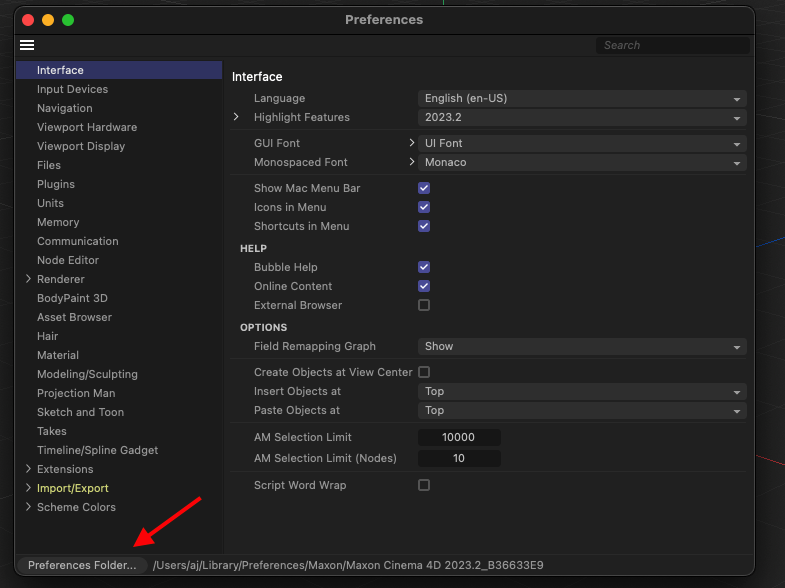
- Open Preferences. Use Cinema 4D’s preferences command and click the button that opens its preferences folder.
- Navigate to library → scripts. Place the script in that scripts directory. This is not a scripts folder directly inside the preferences directory.
- Open Script Manager. Select the script and use Execute to test it in a suitable scene. Menu names and locations can vary by Cinema 4D release.
The original screenshots show the Preferences menu, the Open Preferences Folder button and the library/scripts destination in Finder.
Alternatively, open a .py file with File → Open Script in Script Manager and save it into the user scripts directory. An asterisk beside the script name indicates unsaved changes. Maxon’s Script Manager reference explains the available commands.

02
Add Scripts to Your Daily Workflow
Use It
Once the script runs correctly, give it a convenient place in your layout. Script Manager lets you run the script, create a button from its icon, or assign a keyboard shortcut. Test it before making it part of your everyday workflow.
Run
Select the script in Script Manager and click Execute. If it produces an error or no expected result, check the Console and the script’s requirements.
Button
Drag the script icon into an existing palette or a new command palette. Save the start layout if you want that button to remain part of your default workspace.
Shortcut
Use the Shortcut control to open Command Manager for the selected script, then assign an available key combination. Check for a conflicting shortcut before relying on it.
03
Script not showing up?
Check the setup.
Check the folder. Open the active preferences folder again and confirm the file is in library/scripts for this Cinema 4D version. A copy in an older release’s folder will not automatically appear in the current one.
Check the extracted files. Make sure you copied the script rather than only its ZIP archive. Follow any package-specific instructions for supporting files and folders. Do not rename a plugin file to .py in an attempt to install it as a script.
Check saving and execution. Open the script in Script Manager, save it if needed and use Execute. Inspect the Console for an error message, then check the author’s requirements for the Cinema 4D release and any dependencies.
Check compatibility. A correctly installed file may still use code that needs updating for your version. Moving it between folders cannot repair that code. Send the author your Cinema 4D release, script version and exact error message when requesting help.
04
Script installation
questions.
Where is the Cinema 4D scripts folder?
Inside the user preferences directory for the active Cinema 4D version, open library, then scripts. Opening the preferences folder from the application avoids relying on a hard-coded Mac or Windows path.
Do scripts and plugins use the same installation method?
No. A standalone Python script is managed through Script Manager and the scripts directory. A plugin package may require an installer or a registered plugin folder. Follow the download’s instructions and the separate Cinema 4D plugin installation guide.
How do I keep my script button after restarting?
After dragging its icon into a palette, save the start layout. Maxon’s documentation describes this separately from saving the script file itself.
05
Try a Free Script
Related
The Text Renamer script is a small utility to try after installation. Use a copy of a scene with a few text objects, follow the script’s usage instructions and confirm the result before saving over important work.
06
Install once, then make sure it loads where expected.
Verify
Use the preferences folder for the Cinema 4D version you are running, verify the script with Execute, then save your preferred button or shortcut setup. Keep the original download and its usage notes so you can check compatibility when moving to another Cinema 4D release.